The Bishop's Adviser for Licensed Lay Ministers

Helen Grogutt: helen.grogutt@dioceseofnorwich.org

Admin Support 
Lesley Lofts
Lesley.lofts@dioceseofnorwich.org 

Deputy Warden and Licensed Lay Ministry Training Coordinator
The Revd Charles Read
charles.read@dioceseofnorwich.org / 01603 882331

Address: Diocesan House, 109 Dereham Road, Easton, Norwich, NR9 5ES

What is a Licensed Lay Minister

Licensed Lay Ministers come from a wide diversity of occupations and backgrounds and provide a vital link to the world of work, witnessing to the unchanging love of God in their communities and in their everyday lives. How an individual’s ministry develops is dependent upon his or her individual strengths, the balance of skills within the ministry team and the particular needs of the benefice. Some may have a focus on leading worship; others may be more involved in pastoral work or outreach.

Licensed Lay Ministers are enablers and encouragers of other lay Christians helping them to make use of their gifts in the service of God. Some Licensed Lay Ministers are involved in pioneer ministries and fresh expressions of church, and a new training package is available for those who feel particularly called to that kind of work.

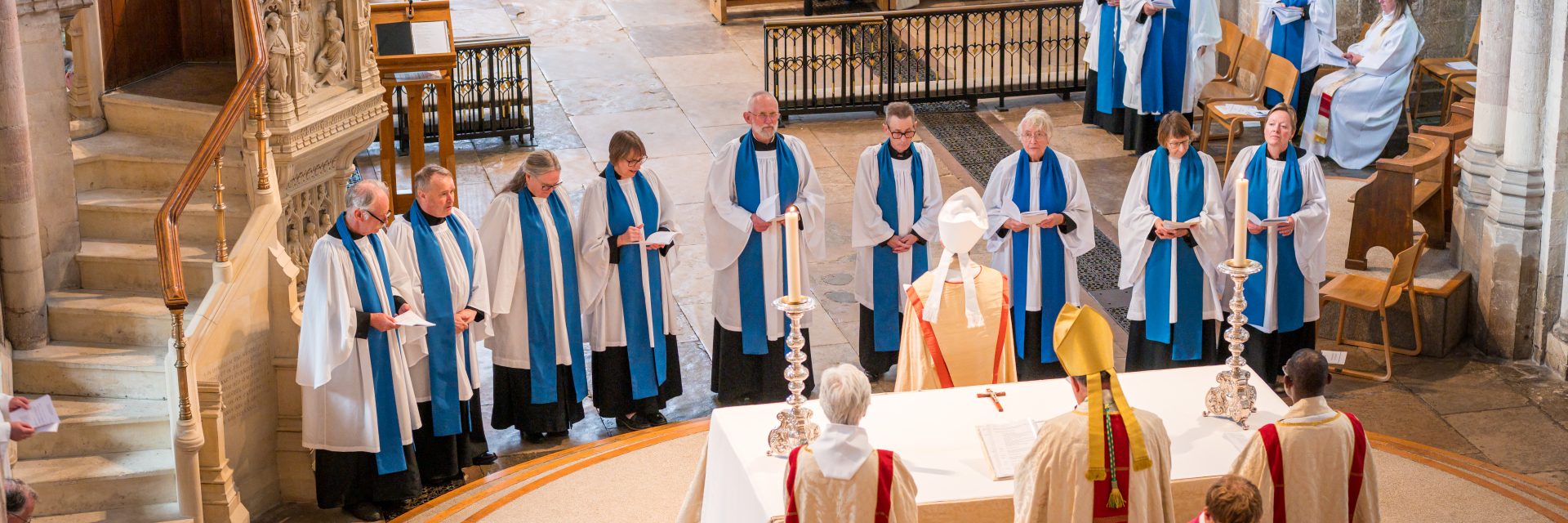
Licensed lay ministry is nationally recognised and those admitted to the office of Licensed Lay Minister in one diocese are welcomed upon relocation to another. Nationally, the ministry of Licensed Lay Ministers is overseen by the Central Readers’ Council.

Licensed Lay Ministry in our Diocese

We have over 156 Licensed Lay Ministers actively ministering in their benefices each week. Licensed Lay Ministers conduct just under two thousand services each year and deliver over one and a half thousand sermons, but that is by no means the full extent of licensed lay ministry.

Licensed Lay Ministers lead home groups and confirmation classes; they are involved in baptism preparation and follow-up; they visit and take the sacraments to the sick, elderly and house-bound; they share in the church’s outreach; they lead school assemblies and work with youth groups and music groups; and a number, authorised by the bishop to do so, conduct funerals – there is almost no end to the ways in which Licensed Lay Ministers put their theological training to good, practical use.

Is Licensed Lay Ministry for you?

Do you think you might be called to licensed lay ministry? We have a Shared Vocation Space which is run once a year from September till January for anyone wishing to explore his or her vocation, whatever that might turn out to be.

Being a Licensed Lay Minister is both an exciting and demanding experience. We are looking for people with the potential to fulfil the threefold ministry.

A Teacher of the FaithIn a spirit of prayer, imagination and creativity someone who:

  • Loves God and has a thorough knowledge of God’s story;
  • Loves people and knows how to listen;
  • Loves learning and knows how people learn;
  • Reflects regularly on their practice.

An Enabler of Mission in the Everyday

  • Teaches everyday faith;
  • Models everyday prayer;
  • Encourages everyday witness;
  • Sustains everyday action.

A Leader in Church and Society

  • Creates the places and processes so that people can learn together;
  • Models humility and teamwork;
  • Resources themselves through good self-care.

If you think God may be calling you to this ministry then do discuss this sense of call with members of your ministry team, family and trusted friends. If you are encouraged by their response the next step is to look at the annual timetable for selection which is set out in the Discernment and Selection document below.

In summary, a selection day takes place usually at the end of April for training to begin in August each year, and there’s a fair bit of paperwork to do before that, so we ask your vicar to have referred you to the Warden of Readers for inclusion in the selection process no later than the end of February each year.

Some books to read to help you think about licensed lay ministry

  • Charles Read and Phillip Tovey Reader Ministry Today (Grove Books 2010)
    (A short book by our own Deputy Warden and his counterpart in Oxford diocese)
  • Phillip Tovey Instruments of Christ’s Love (SCM 2016)
    (A longer book developing the  ideas in the one above)
  • Cathy Rowling and Paula Gooder Reader Ministry Explored (SPCK 2009)
    (Cathy is Principal of the Lindisfarne training course and Paula is a Licensed Lay Minister who is also a well-known writer and speaker on Biblical Studies)

You can borrow these from the Ministry and Training library/bookstore at Diocesan House (catalogue below). Grove Books can be ordered online including downloadable versions.

Students follow a two year programme which is delivered in partnership with the Eastern Region Ministry Course.

The initial training for licensed lay ministry is thorough and students follow a two year programme which is delivered in partnership with the Eastern Region Ministry Course which oversees the academic component of the training. Students study the national Common Awards, validated by Durham University, and attain a Certificate in Theology for Ministry and Mission by the end of two years. There is scope for further university study after admission and we hope to enable Licensed Lay Ministers to progress to Diploma and Degree level if that is appropriate.

The Church’s ministry in the twenty-first century is demanding and it is vital that its public ministers have a meaningful prayer life, a sound biblical knowledge, are able to reflect theologically and have appropriate pastoral skills to enable them to serve effectively in their communities.

But although the training course is challenging, it is designed to meet the needs of a wide variety of students many of whom have not studied in earnest for many years, if at all. The course begins with a week-long summer school, which includes some introduction to study and IT skills and to the study of theology more generally as well as enabling students to begin to reflect on what it means to be a Christian minister.

The course tutors are all experienced in supporting students with vastly different academic backgrounds and all have significant experience of Christian ministry.

Pioneer Licensed Lay Ministry Training

We offer a Pioneer Pathway through licensed lay ministry. It is for those who see their focus on being outside ‘traditional’ churches, with the balance of their time weighted towards fresh expressions and church planting. It will include most of the ‘standard’ Licensed Lay Minister training on Old and New Testament, Doctrine, Worship and so on, but in addition will feature modules such as Creating New Christian Communities. Those who complete the course will be capable of ministering in both traditional and new church communities, with the desire and capacity to start new Christian communities in a variety of contexts.

Children and Young People’s Pathway

From August 2023 we will be running a pathway through LLM training which focuses on ministry with children and young people. This will include modules on biblical studies, theology and ministerial practise as well as modules on youth and children’s work, child development and so on. Like other LLM pathways, it is a two year programme which will lead to a certificate in theology and ministry from the university of Durham and, if students demonstrate suitability for public ministry in the Church of England, licensing as an LLM by the Bishop. Teaching will be partly in face to face classes and partly online.

Selection for Training for Licensed Lay Ministry

If, after working with a vocation advisor for some time, you believe that you have a call to licensed lay ministry, you will be invited to attend a selection day where that call can be tested.

A selection day consists of worship, discussion, individual interview, presentations and written and practical activities, during which a team of experienced selectors will observe you and the other candidates and prayerfully endeavour to discern whether you have a vocation to licensed lay ministry, whether you need to undertake more work before a decision can be made or whether you should, perhaps, be exploring other avenues of service. Every effort is made during the day to create a relaxed atmosphere in which candidates can do justice to themselves.

It is important to remember that, if the selectors recommend you, their recommendation is that you should commence training for licensed lay ministry – the process of discernment continues throughout the period of your training.

A library of theological books is available at Diocesan House for all Licensed Lay Ministers and Ordinands in training to use. In addition, students can borrow books from the Cathedral library.

The Bishop’s Adviser for Licensed Lay Ministers acts on behalf of the Diocesan Bishop in all matters relating to Licensed Lay Ministry.

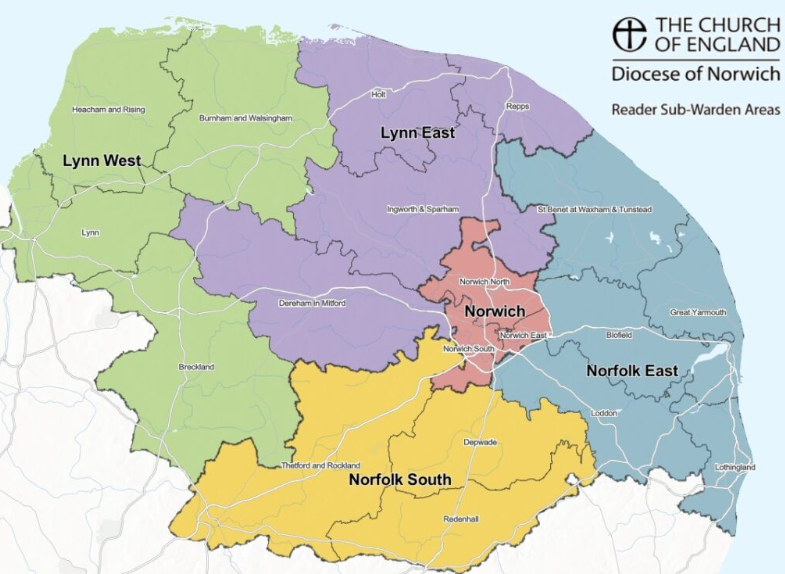
The Adviser is assisted in this work by five area Sub-Wardens who have general oversight of the Licensed Lay Ministers in their geographical areas, offering guidance through individual conversations and interviews and by facilitating local meetings for mutual support.

A Licensed Lay Minister’s training does not end when he or she is admitted to the Office of Reader. All Licensed Lay Ministers are expected to continue to develop as Christian ministers: growing in their personal spirituality, continuing to engage with scripture, reflecting theologically upon the issues of the day and developing their pastoral skills. To this end, Licensed Lay Ministers are encouraged to pursue a personal programme of ministerial development making use of the two annual central days for Licensed Lay Ministers (Bishop’s Day and Warden’s Day) and through a variety of appropriate courses.

Grant aid is available to help Licensed Lay Ministers cover the costs of their continuing ministerial development.

Licensed Lay Ministers are expected to follow the Code of Ministerial Practice for Reader Ministry which states the clear and consistent guidelines, expected behaviours and standards of good practice for Licensed Lay Ministers and those supporting them in their parish settings across the diocese. The document below also gives details of the disciplinary and grievance processes that are available if problems arise and informal methods of dispute resolution have been unsuccessful.

The Bishop’s Adviser for Licensed Lay Ministry is supported in the administration and development of the ministry by the Licensed Lay Ministers’ committee.

Grant aid is available to help Licensed Lay Ministers cover the costs of their continuing ministerial development.

  • An allowance of £450 for the three year period 1/1/2025 to 31/12/2027 is available, with pro-rata adjustments for those being licensed and those due to retire during that period.
  • The grant may be used for the purchase of books, attendance at conferences and on courses and for other activities / events that contribute to the ministry of the Licensed Lay Minister, though a maximum of £50 a year will be allowed on books.
  • The application must make clear how the ministry of the Licensed Lay Minister will be developed and must be endorsed by their Incumbent / Priest-in-Charge.
  • Application must be made before the event takes place or the book has been purchased.
  • Grants will not normally be made for repeat or similar events in recognition that the grants are intended to develop the ministry of Licensed Lay Ministers in the widest sense.
  • Applications must specify the date and nature of the event or the title of the book for which funding is sought.
  • It is not intended that the allowance will cover the cost of travel. Applicants are asked to approach their parish/benefice to cover this cost wherever possible.
  • If other grants have been sought for the same event, such applications must be declared on the grant application form.
  • Feedback concerning the usefulness / appropriateness / value of the event / book / activity must be sent to the Bishop’s Adviser for Licensed Lay Ministers to enable the dissemination of information more widely to other Licensed Lay Ministers who might also benefit.
  • Grants are awarded at the discretion of the Bishop’s Adviser for Licensed Lay Ministers.

All Licensed Lay Ministers in the diocese are encouraged to have a Working Agreement with their Incumbent / Priest-in-Charge and to review this as part of a Ministerial Development Review at least every two years.

A form for this can be downloaded below:

In addition to their working agreement, Licensed Lay Ministers are encouraged to review their ministerial development regularly, and most combine this with the review of their working agreement with their Incumbent/Priest-in-Charge. Some Licensed Lay Ministers may prefer to have their MDR with their spiritual director, or area warden. A form follows which can be used for this, or as questions for self-reflection before review of their working agreement.

It is often helpful to ask others to give feedback as part of an MDR, and a form for this is offered below.

Related Documents

Requirements of an incumbent with an LLM in training

Download

Incumbents Nomination

Download

LLM Selection Criteria

Download

Licensed Lay Ministry and Discernment Process

Download

Library Catalogue

Download

LLM Training Handbook

Download

Supervisor's Handbook

Download

Continuing Ministerial Development

Download

LLM Code of Practice

Download

CMD Allowance Application Form

Download

Working Agreement Template

Download

LLM MDR

Download

Colleague Feedback Form

Download

Licensed Lay Minister Chaplain email addresses