Following God's calling to your vocation
Which path shall I take?
If you believe you are called to ministry, there are many ways to serve and paths to follow.
Sometimes the greatest impact can be made by living out our faith as a disciple of Jesus in the wider world. But for those who discern that ministry is the way forward, ordination is just one of the many opportunities available.
In this diocese, we believe in enabling, resourcing and encouraging all kinds of ministry – lay or ordained – from initial training and continuing development, right through to retirement when many choose to continue to serve. With its diversity of needs, the Diocese of Norwich is a place you can make a difference.
- You want to help people make a link between life and faith? Perhaps God is calling you to be a hospital chaplain.
- You’re creative and innovative and want to lead people to a new space in their lives? God may be asking you to consider becoming a Pioneer.
- You already have a job you love but would like to minister at the same time? Training as a Licensed Lay Minister with a focus on the local community could be the path for you.
Your first step might be as an Authorised Worship Assistant playing a key role in benefices where ministers can’t always be available. This could lead you on to training for licensed lay ministry or ordination. You may start off as lay minister then choose another path, perhaps into paid ministry. In this diocese, we aim to make the transition as smooth as possible. We invest in people to provide opportunities and to help you find a clear path to your chosen vocation.
Whatever path you’re called to take, this is a diocese that invests in getting alongside you, helping you and our congregations and communities to flourish.
Ordained Ministry
If you believe God may be calling you towards Ordained Ministry then the first step is to share your thoughts and feelings with people you know and trust. Can they see this vocation in you? You should also have a conversation with your parish priest.
Before you can enter the formal process of discerning a call to Ordained Ministry you will need a referral from the incumbent (parish priest with overall responsibility) of the church where you worship, who should have known you for a minimum period of six months. (In cases where your parish is in vacancy, other arrangements for referral will be made. Contact us for details).
Your vocation to the priesthood needs to be realistic, obedient and informed so a good place to start the journey is our Shared Vocation Space, a programme running from September through to Easter each year.
Steps to ordination
If the path points towards ordination, you will be guided through a two-stage process and your Bishop will decide whether to recommend you for ordination training.
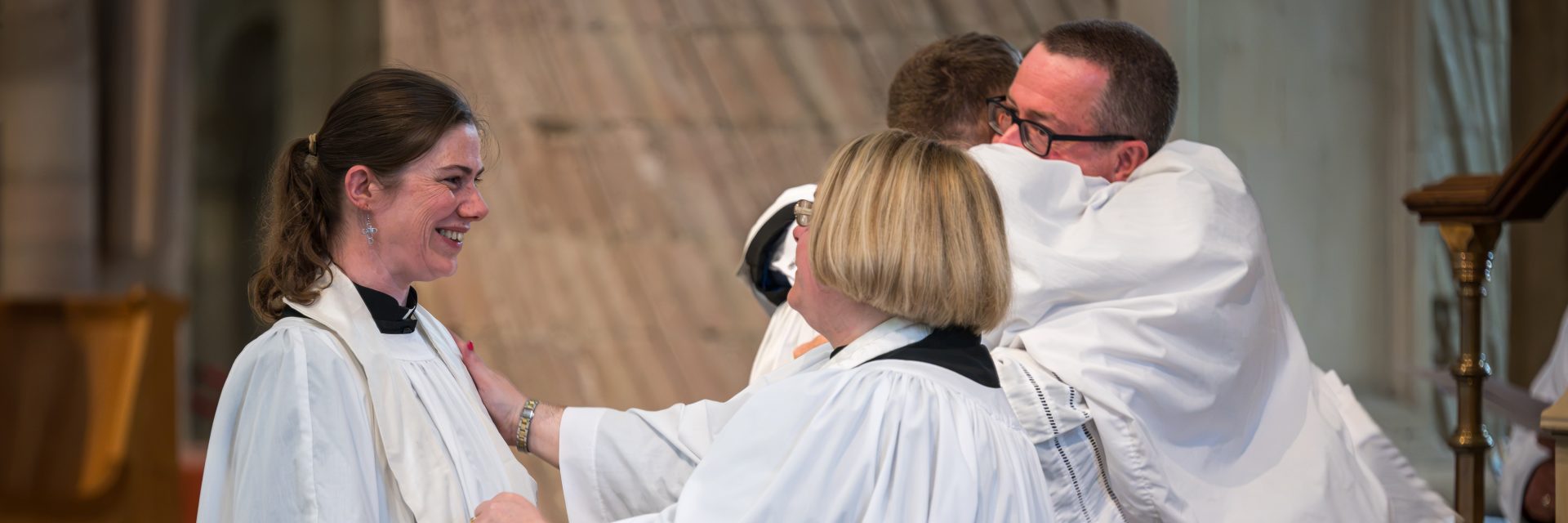
If you are sponsored to train for ordained ministry, you will train for ministry at a theological college, which could be residential or low-residency, full- or part-time, local or further afield. God willing, you will be ordained a deacon by your bishop and begin a curacy in a parish. Choosing to serve your curacy in this diocese, you will be assured of full and friendly support along with plenty of resources. You will work alongside an experienced church leader, putting all you have learned into practice as you prepare for your own ministry.
If you are training for the priesthood, you are likely to be ordained after a year of curacy and be able to preside over Holy Communion. As deacon you will already have experience ministry and indeed you may feel called to remain a deacon. However God leads, there’s a place for you in this diocese.
The Discernment Journey
The journey is challenging, stimulating and extremely thorough. It looks for evidence of your spiritual and personal development over a period of time, and involves reading, reflection and the fulfilment of a number of activities. It asks you difficult questions and explores patterns of relationships and behaviours right back to your early childhood.
We aim to be as inclusive as possible and do not seek to put artificial barriers in front of anyone whom we discern to be called to priesthood. We acknowledge that the exploration can make considerable demands and we aim to support you as much as we possibly can.
Once you have had a conversation with your incumbent, if they sense the call to ordained ministry in you, they will put you in touch with the Diocesan Director of Ordinands (DDO) for an initial meeting. Possible outcomes are:
- assignment to an Assistant DDO (or to the DDO) for one-to-one discernment
- recommendation to attend the Shared Vocation Space programme before entering formal discernment
- recommendation to wait until more experience of the Anglican church has been gained
- recommendation to consider other vocational pathways
The Shared Discernment Process
The discernment process is both searching and supportive. Over a period of at least a year, or maybe longer, you will be prepared for the new Shared Discernment Process, a two-stage journey which replaces the old system of a single Bishop’s Advisory Panel.
The Shared Discernment Process is divided into two stages:
- Carousel Conversations
- Residential selection panel
To prepare for these, you will meet regularly with your (A)DDO and your incumbent, go on a placement, take part in the ‘Preparing Together’ group and commit to reading about ordained ministry, journalling and talking to people with whom you will be put in touch. You will need to have a well-established daily discipline of prayer and Bible reading to sustain and inspire you through this journey.
The Church of England uses six Discernment Qualities; you will be expected to show evidence of how you inhabit these qualities all the way through your discernment journey. The qualities are:
- Love for God
- Love for People
- Call to Ministry
- Wisdom
- Potential
- Fruitfulness
The Shared Discernment Process is both active and passive: active because there is a lot to do – it involves a significant time commitment and a commitment to learn and grow – and passive, because you offer yourself to be discerned by those who share in this ministry with the Bishop.
If you embark on this journey, along the way you will meet with your Bishop who will decide whether to sponsor you through the Shared Discernment Process and ultimately, whether to ordain you. You will be held in prayer and supported by the Vocations Team, and if the Church feels that is the vocation to which God is calling you, you will train for ministry before ordination as a deacon and priest.
It can be intimidating to think about setting out on such a journey, but the God who calls also equips, befriends and empowers us in ways that we could never imagine. May God bless and lead you as you consider your own calling.
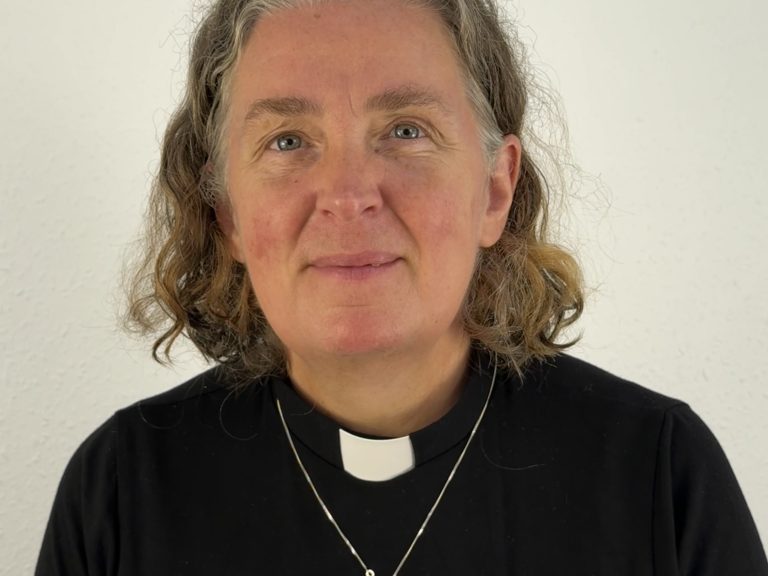
Revd Lucy Dallas
If you are wondering about your call, the first thing to do is to speak to your Vicar or other local church minister, and if you have any questions, please contact me at lucy.dallas@dioceseofnorwich.org.
God bless you as you follow Christ.
Vocational videos on Diocese youtube channel
Watch short films from people who have shared their vocational calling in the Diocese of Norwich, through ordained or lay ministry.